
Leverhulme Visiting Professor David M. Pritchard
Leverhulme Visiting Professorship
- School of History, Classics and Archaeology
Contact details
Address
- Street
-
School of History, Classics and Archaeology
The University of Edinburgh
Old Medical School
Teviot Place - City
- Edinburgh
- Post code
- EH8 9AG
Background
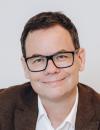
David M. Pritchard is currently the Leverhulme Visiting Professor at the University of Edinburgh. His permanent position is at the University of Queensland (Australia), where he has chaired the Department of Classics and Ancient History. He has obtained 16 research fellowships in Australia, Denmark, France, the Netherlands, the United Kingdom and the United States of America. Leverhulme Visiting Professor Pritchard is currently the lead chief investigator on a large project that is funded by the Australian Research Council. He is the author of Athenian Democracy at War (Cambridge University Press 2019), Sport, Democracy and War in Classical Athens (Cambridge University Press 2013) and Public Spending and Democracy in Classical Athens (University of Texas Press 2015). Leverhulme Visiting Professor Pritchard has edited The Athenian Funeral Oration: After Nicole Loraux (Cambridge University Press 2024) and War, Democracy and Culture in Classical Athens (Cambridge University Press 2010). He has co-edited Waging War in Fourth-Century Athens: New Appraisals (Routledge 2026) and Sport and Festival in the Ancient Greek World (Classical Press of Wales 2003). Leverhulme Visiting Professor Pritchard has also published 73 journal articles and book chapters. He has an h-index of 22 and 1800 known citations. He has obtained the equivalent of 2.2 million Australian dollars in research funding. Leverhulme Visiting Professor Pritchard speaks on radio and regularly writes for newspapers around the world. His 64 op.-eds have appeared in, among other outlets, Die Süddeutsche Zeitung (Germany), Le Monde (France), Le Figaro (France), Ouest-France, Sud Ouest (France), The Conversation (Australia, France and Spain), Kathimerini (Greece), Inside Story (Greece), Scroll.in (India), The Age (Australia), The Australian, Politike (Brazil) and The Daily Star (Bangladesh). Leverhulme Visiting Professor Pritchard obtained his PhD in Ancient History from Macquarie University (Australia).
CV
 159404.pdf
Qualifications
Doctor of Philosophy (Macquarie University [Australia])
Bachelor of Arts with Honours and University Medal (Macquarie University [Australia])
Research summary
Ancient Athens was, probably, the most successful Greek state in classical times. The 3 major public activities of the Athenian dēmos were democratic politics, religious festivals and wars. Classical Athens was a runaway success in each activity: it developed democracy to a far higher level than any other premodern state, became a military superpower and had Greece’s largest program of religious festivals. Professor Pritchard stands out for significantly advancing our knowledge on, not one, but all 3 core areas of public business. For example, he completed the first exhaustive investigation since August Böckh in the 1810s into how much the classical Athenians spent on their 3 major activities (Pritchard 2015). He continues to study how they waged their almost nonstop wars (e.g. Pritchard 2019). Professor Pritchard published the most detailed analysis of the extent of their participation in games (Pritchard 2003). What makes him stand out still more is his systematic investigation into how these 3 activities impacted on each other. For example, he explored how the conception of sport and war with a common set of ideas positively affected the public standing of both activities (Pritchard 2013). He has put beyond doubt that democracy itself was a major reason for Athenian cultural and military successes (e.g. Pritchard 2010).
Project activity
a. The Sydney Olympics Book Project
This project brought together 19 scholars from Ancient History, Classical Archaeology, Classics and Museum Studies to explore the impact of sporting festivals on the ancient Greek city. The project’s members included the Director of the German Archaeological Institute’s excavations of the site of the ancient Olympics, Prof. H. Kyrieleis, and the Director of the University of Berkeley’s excavations of the site of the ancient Nemean Games, the late Prof. S. C. Miller. It began with a conference on the eve of Sydney Olympics of 2000. The Classical Press of Wales published our 15 chapters at the end of 2003. This edited book of 448 pages is now considered a major work of reference on its subject. I was this collection’s main editor and the project’s manager. I commissioned, refereed and edited the book’s chapters, wrote a chapter of 58 pages, and secured 21,000 Australian dollars of competitive research funding and another 17,000 dollars of corporate donations. In raising these funds, I worked in partnership with the Consul-General of Greece in Sydney and the International Olympic Committee (IOC). On the eve of the Athens Olympics of 2004, I organised for Australian and Greek diplomats to launch our book in Athens, Sydney and Wellington. These launches produced national and international media coverage (e.g. B. O’Keefe 2004, Higher Education Supplement, Australian 14 July, 2; J. Ross 2004, Kathimerini 1 May, 16).
b. The War, Democracy and Culture Project
This project brought together 15 ancient historians, classical archaeologists and classicists to explore democracy’s impact on Athenian warmaking from multidisciplinary perspectives. Among its members were Brown University’s Workman Distinguished Professor of Classics, Prof. D. Konstan; Stanford University’s Mitsotakis Chair of Classics, Prof. J. Ober; and Cambridge University’s Professor of Ancient History, Prof. R. Osborne. The keynote speakers of our conference were interviewed for an hour on Radio National, while I published an opinion piece about it (D. M. Pritchard 2006, Sydney Morning Herald 3 July, 11). The outside partners which co-funded this project were the Aroney Trust (Australia), the Australian Archaeological Institute at Athens, the Australasian Society for Classical Studies and Macquarie University. Cambridge University Press published our 15 chapters at the end of 2010. This book of 478 pages continues to make a significant research impact. I was this book’s editor and the project’s manager. I commissioned, edited and refereed our chapters, wrote a chapter of 62 pages, negotiated its outside partnerships, convened its public events and raised 47,000 dollars of competitive research funding.
c. The Sydney Democracy Forum
This project brought together ancient historians, modern historians, political scientists and policymakers in order to share research across disciplines and between the research sector and the government on democracy’s impact on foreign policy. I founded this forum in 2007. Its inaugural program involved 30 speakers from 6 countries in 12 events. It picked up regular media coverage, with some of its speakers publishing opinion pieces (e.g. A. Stam 2007, Sydney Morning Herald 6 November, 11; J. Keane 2007, Sydney Morning Herald 11 October, 13). The outside partners which co-sponsored its events included the Department of Foreign Affairs and Trade, the Human Rights and Equal Opportunity Commission and the Lowy Institute for International Policy. As the forum’s founder I wrote its statement of purpose, negotiated its outside partnerships, organised its first year’s events and raised 30,000 dollars of competitive research funding. In 2010, the University of Sydney upgraded this forum into the Sydney Democracy Network
d. The Cultural History Project
This project supported the sharing of research across humanities disciplines at the University of Queensland by facilitating the collaboration of its cultural historians. It began in 2008 and was funded for 5 years by the Deputy Vice-Chancellor Research. The project was led by Assoc. Prof. C. Dixon, while its other members were Assoc. Prof. J. Jacobs and Dr P. Ahrens. As a group we co-convened numerous multidisciplinary workshops, public lectures and seminars, and the International Society for Cultural History’s second conference. I set up the project’s open-access collection of preprints and podcasts (http://espace.library.uq.edu.au/collection/UQ:152015) and wrote its statement of purpose. Under the project’s aegis, I networked Australian researchers working on Greece’s cultural history from ancient times to the present day by putting on public lectures, creating a publicity list of thousands of emails and convening Queensland’s Inaugural Greek History Conference. This conference had speakers from Ancient History, Archaeology, Classics, Hellenic Studies and Modern History. It was opened by Greece’s Ambassador to Australia and was filmed for Greek television. The outside partner which co-funded this network’s events was the Greek Orthodox Community of St George, Brisbane.
e. The Funeral Oration Project
This project brought together 20 of the world’s leading Hellenists to study the famous funeral oration of democratic Athens. This solemn speech was delivered each year for Athenians who had died in war. This project has produced the first comprehensive study of this genre in more than 40 years. It is the richest study to date of the treatment of war in Athenian culture. The project’s outside partners were l’Institut d’études avancées de l’université de Strasbourg (USIAS) and l’Institut d’études avancées de l’université de Lyon. For this project’s realisation, USIAS granted me $96,000. Further funding of $30,000 came from the Aroney Trust, the Fritz Thyssen Foundation and HiSoMA. The conference that brought together the project-members took place in Strasbourg in July 2018 (http://www.usias.fr/en/evenements/the-athenian-funeral-oration-40-years-after-nicole-loraux/). I co-convened a follow-up study day in Lyon in February 2020. In January 2024, Cambridge University Press published the edited book of 554 pages coming from these 2 events. I was the project’s manager and edited The Athenian Funeral Oration: After Nicole Loraux.
f. The Postwar Athens Project
This project brought together 18 leading ancient historians from France and across the world in order to rewrite Athenian history after 404 BC. Traditionally, historians of ancient Greece understood the fourth century as a period of steep decline. The great French historian, Claude Mossé, did the most to promote the view that postwar Athens never recovered from its crushing defeat in the Peloponnesian War. For her, this decline had a striking military dimension: postwar Athens was no longer able to protect itself and could not stop the rise of Philip II and Alexander the Great. In the last 40 years, there has been a general rewriting of this traditional view. But we still do not have a comprehensive reassessment of postwar Athens’s military record. This project aimed to provide this reassessment. The major external partners were l’Institut d’études avancées de Nantes (IEA de Nantes) and the Australian Research Council (ARC). For the project’s realisation, the IEA de Nantes provided $96,000, the ARC $38,000, the Aroney Trust $10,000 and Macquarie University (Australia) $5000. Project-members gathered for a major international conference in Nantes (France) in July 2023 (https://www.iea-nantes.fr/en/). In November 2025, Routledge published Waging War in Fourth-Century Athens: New Appraisals. Along with Prof. I Worthington (Macquarie University), I co-managed this project and co-edited the resultant edited book.
Current project grants
2026-7 Leverhulme Trust Visiting Professorship ($200,000).
2026 University of Queensland HPI Grant for the Brisbane Olympics Exhibition ($1000).
2025 Aroney Trust Grant for the Athenian Armed Forces Book ($10,000).
2020-6 ARC Discovery–Projects Grant for the Athenian Democracy at War Project ($141,000).
Past project grants
2025 University of Queensland HASS Funding for the Brisbane Olympics Exhibition ($3000)
2024 University of Queensland HPI Grant for the Postwar Athens Project ($2000).
2023 University of Queensland HPI Grants for the Funeral Oration Project ($4000).
2023 Aroney Trust Grant for the Postwar Athens Project ($10,000).
2023 Friends of Antiquity Research Grant for the Postwar Athens Project ($1000).
2022-3 Research Fellowship in l’Institut d’études avancées de Nantes ($95,000).
2021 University of Queensland HPI Grant for the Funeral Oration Project ($2000).
2020 Research Fellowship in the Netherlands Institute for Advanced Study ($42,000).
2019-20 Research Fellowship in the University of Lyon’s le Collegium de Lyon ($84,000).
2018 Research Fellowship in Strasbourg University’s Institute of Advanced Study ($96,000).
2018 Aroney Trust Grant for the Funeral Oration Project ($10,000).
2018 ASCS Conference Grant for the Funeral Oration Project ($1000).
2017 Fritz Thyssen Stiftung Conference Grant for the Funeral Oration Project ($15,000).
2017 University of Queensland EFS Grant for the Funeral Oration Project ($5000).
2017 Friends of Antiquity Research Grant for the Funeral Oration Project ($1000).
2017 AAIA Grant for the Funeral Oration Project ($1000).
2016 Margo Tytus Visiting Fellowship at the University of Cincinnati ($20,000).
2015-16 Research Fellowship in Strasbourg University’s Institute of Advanced Study ($150,000).
2015 Research Fellowship in Durham University’s Institute for Advanced Study ($30,000).
2015 Aroney Trust Grant for the Democracy and War Project ($5000).
2013 UQ–UWA Bilateral Research Collaboration Award ($16,000).
2013 Aroney Trust Grant for the Public-Spending Project ($5000).
2013 Charles Gordon Mackay Lecturer in Greek at the University of Edinburgh ($1000).
2012 University of Queensland HPRC Grant for the Democracy and War Project ($3000).
2012 University of Queensland GASS Grant for the Democracy and War Project ($1000).
2011 Aroney Trust Grant for the Sport and Democracy Project ($5000).
2011 University of Queensland ResTeach Grant ($52,000).
2011 Danish Central Bank Visiting Scholar Fellowship ($20,000).
2011 University of Queensland CCCS Faculty Fellowship ($10,000).
2011 University of Queensland HPRC Grant for the Sport and Democracy Project ($3000).
2010 ASCS Conference Grant for the Cultural History of the Greeks ($1000).
2009 University of Sydney RIBG Grant for the Sydney Democracy Forum ($10,000).
2008 University of Queensland NSRS Grant for the Sport and Democracy Project ($12,000).
2008 University of Queensland ECR Grant for the War and Democracy Project ($8000).
2007 University of Sydney Development Grant for the Sydney Democracy Forum ($5000).
2007 University of Sydney RIBG Grant for the Sydney Democracy Forum ($10,000).
2007 University of Sydney Seed Funding Grant for the Sydney Democracy Forum ($5000).
2006 Aroney Trust Grant for the War, Democracy and Culture Project ($10,000).
2006 University of Sydney International Travel Grant ($2000).
2006 University of Sydney Grants from the DVCR, Faculty of Arts and SOPHI for the War, Democracy and Culture Project ($16,000).
2006 University of Sydney Visiting Fellowship Grants for the War, Democracy and Culture Project ($17,000).
2006 Macquarie University Grants for the War, Culture and Democracy Project ($3000).
2006 ASCS Conference Grant for the War, Culture and Democracy Project ($1000).
2005-8 University of Sydney Postdoctoral Research Fellowship ($253,000).
2004-6 Macquarie University Research Fellowship ($247,000).
2004 Macquarie University International Project Grant for the Sydney Olympics Book ($6000).
2002 International Olympic Committee Grant for the Sydney Olympics Book Project ($7000).
2002 Aroney Trust Grant for the Sydney Olympics Book Project ($3000).
2001-2 Macquarie University Research Grants for the Sydney Olympics Book Project ($15,000).
2001-2 Junior Research Fellowship in Macquarie University’s ACANS Centre ($18,000).
1998 AAIA Postgraduate Scholarship ($1000).