
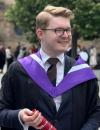
Jamie Sutherland (MA MDiv PGDip FSAScot)
Thesis title: Theological Formation and the Identity of the Reuniting Church of Scotland, c.1900-1939.
PhD History of Christianity
Year of study: 1
- School of Divinity
Contact details
- Email: Jamie.Sutherland@ed.ac.uk
PhD supervisors:
Address
- Street
-
Semples Room
School of Divinity
Mound Place - City
- Edinburgh
- Post code
- EH1 2LX
Background
I am a PhD candidate in the History of Christianity. My research focuses on the history of the Church of Scotland in the early 20th century, considering the interrelated themes of intellectual culture, theological identity, and theological formation. Originally from Inverness, I studied MA (Hons) Philosophy & Linguistics at the University of Edinburgh before qualifying in Library & Information Studies at Robert Gordon University. After graduation, I worked primarily in libraries and archives within the higher education sector. Entering training for Full Time Ministry of Word & Sacrament in the Church of Scotland, I completed a Master of Divinity (MDiv) at the University of Edinburgh. I currently serve as Probationer Minister at St Giles' Cathedral.
Qualifications
MA (Hons), Philosophy & Linguistics, University of Edinburgh
MDiv (Hons), Divinity, University of Edinburgh
PGDip, Library & Information Studies, Robert Gordon University
Responsibilities & affiliations
Trustee, Chalmers Lectureship Trust
Council Member, Scottish Church Society
Fellow, Society of Antiquaries of Scotland
Research summary
My research interests focus on the history of Reformed theology in the Scottish context, particularly as it overlaps with questions of the church identity, the history of ideas, and socio-political forces. My areas of interest include:
- History of the Church of Scotland
- Religion, politics, and social identity
- Philosophical theology
- Liturgical theology
- Historical theology and intellectual history
Current research interests
My doctoral research, funded by The Hope Trust, examines the theological identity of the Church of Scotland and the United Free Church of Scotland in early 20th century, particularly during the period surrounding their re-unification in 1929. Developing upon existing literature, I aim to examine this period from the new angle of theological formation. The project aims to examine to what extent the identity of the Church of Scotland reflected the theological trends emerging within the church, and how this affected the Church of Scotland’s theological self-understanding during the process of reunification. In turn, it explores how the theological identity and intellectual culture of the reuniting Church of Scotland affected the ways in which its members were formed through its statements of faith, public lectures, and publications.Project activity
Theological Formation and the Identity of the Reuniting Church of Scotland, c.1900-1939.
Current project grants
The Hope Trust Doctoral Fellowship (2026-2029)