
Dr. Stefano Comazzetto
Chancellor's Fellow and Group Leader
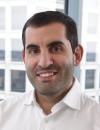
- Centre for Regenerative Medicine
- Institute for Regeneration and Repair
- School of Medicine and Veterinary Medicine
Contact details
- Tel: +44 (0)131-651-9554
- Email: scomazze@ed.ac.uk
- Web: Orcid
- Twitter/X
Address
- Street
-
Centre for Regenerative Medicine
Institute for Regeneration and Repair
The University of Edinburgh
Edinburgh BioQuarter
5 Little France Drive - City
- Edinburgh
- Post code
- EH16 4UU
Background
After graduating in Molecular Biology at the University of Padua, I earned my Ph.D. from the European Molecular Biology Laboratory (EMBL) and the University of Dundee in 2014 for my work in Prof. Dónal O'Carroll laboratory. In 2015 I was awarded an EMBO long-term postdoctoral fellowship to work with Prof. Sean Morrison’s at UT Southwestern Medical Center in Dallas. In 2024 I joined the Centre for Regenerative Medicine at the University of Edinburgh as a Chancellor's Fellow and Group Leader. In my laboratory, I will investigate how metabolites regulate the function of normal stem cells and transformed leukemic cells.
Research summary
Metabolic regulation of normal and pre-leukemic HSCs
Haematopoietic stem cells (HSCs) sustain the production of blood cells necessary for life. Metabolites derived from the diet provide the building blocks that support the maintenance and function of HSCs. But how do diet-derived metabolites regulate HSCs? During ageing, HSCs accumulate pre-leukemic genetic mutations that confer a competitive advantage to mutant HSCs and lead to their expansion. This process, called clonal haematopoiesis (CH), positively correlates with an unhealthy diet and obesity. Hence, do diet-derived metabolites influence the expansion of mutant cells in CH? In the laboratory, we will investigate how metabolites derived from the diet regulate the self-renewal of normal HSCs and pre-leukemic HSCs found in clonal haematopoiesis.
Identification of metabolic vulnerabilities in acute lymphoblastic leukaemia
B-cell acute lymphoblastic leukaemia (B-ALL) is one of the most common cancers in children, but it affects people of all ages. Although recent therapies using high doses of chemotherapy significantly improved the prognosis of B-ALL patients, these harsh treatments can come with lifelong side effects. Therefore, there is a concrete need to develop kinder and more targeted therapies for this aggressive disease. We have recently discovered that vitamin C deprivation in haematopoietic cells causes the development of B-ALL in mice. Therefore, can we identify new metabolic regulators of leukemic transformation and progression? Our studies focus on identifying novel metabolic vulnerabilities of leukemic cells that can help fight B-ALL.
Current research interests
haematopoietic stem cells, self-renewal, acute lymphoblastic leukaemia,clonal haematopoiesis, metabolism, dietPast research interests
epigenetics, small non-coding RNAs, germ cell, haematopoiesis, bone marrow nicheAffiliated research centres
Project activity
Regulation of HSC self-renewal by metabolite transporters
In cells most metabolites are taken up from the microenvironment and moved across membranes using specialized metabolite transporters. A significant fraction of the human and mouse genome encodes for metabolite transporters, with ~500 transporters from the Solute Carrier (Slc) and ATP-binding cassette (ABC) transporter superfamilies. In my postdoctoral studies, I discovered that deletion of Slc23a2, the main ascorbate (vitamin C) transporter in haematopoietic cells, depleted intracellular ascorbate levels and enhanced the self-renewal of HSCs and multipotent progenitors downstream of HSCs. This suggests that many other metabolite transporters can be key regulators of HSC self-renewal and function. To systematically address this question, my lab will perform genome-wide loss-of-function genetic screens targeting metabolite transporters in HSCs. Our goal is to identify novel metabolic regulators of HSC function that can in turn by exploit to promote haematopoietic regeneration after injury.
Dietary regulation on Clonal Haematopoiesis
Clonal haematopoiesis (CH) is common in aged individuals, present in >10% of individuals over 60 years of age. Importantly, CH associates with a reduction in overall survival due to an increased risk of development of haematological malignancies and other diseases. Although the mutations in CH are known, clones with mutations in the same gene show great variability in their kinetics of expansion among individuals. What are then the factors that regulate the expansion of CH mutant clones? Since the presence of CH positively correlates with an unhealthy diet and obesity, it is possible that changes in diet-derive metabolites influence the kinetics of expansion of CH clones. To start addressing this question, my lab will use a combination of in vitro and in vivo cell competition assays, metabolomic profiling, and genetic screens. Our ultimate goal is to identify metabolic vulnerabilities of mutant clones in clonal haematopoiesis to halt their expansion and their transformation into frank haematological malignancies.
Identification of metabolic vulnerabilities in acute lymphoblastic leukaemia
B-cell acute lymphoblastic leukaemia (B-ALL) in an aggressive cancer that commonly affects children. B-ALL arises from the transformation of B cell progenitors. During this process, malignant cells rewire their metabolism to promote their expansion and survival. We have recently discovered that depletion of vitamin C, a metabolite derived from the diet, in haematopoietic cells leads to B-ALL in mice. We are presently investigating how vitamin C prevents B-ALL development in mouse and human models of the disease. Second, we aim to systemically identify the other metabolite transporters that control the formation and progression of B-ALL using genetic screens. Our goal is to discover new metabolic vulnerabilities in B-ALL that can lead to gentler and more targeted therapies for this aggressive leukaemia.
Medical Research Scotland
The Royal Society
Leukaemia UK
Prof. Katrin Ottersbach - University of Edinburgh
Prof. Keisuke Kaji - University of Edinburgh
Dr. Alex Von Kriegsheim - University of Edinburgh
Prof. Kamil Kranc - ICR
Prof. Chris Halsey - University of Glasgow
Prof. Vignir Helgason - University of Glasgow